
Affiliate disclosure: This guide includes Amazon and Stay22 links. As an Amazon Associate I earn from qualifying purchases. Explorelio may also earn a commission from other partner links, at no extra cost to you. Linked listings are examples, not products we claim to have personally tested.
What actually earns a place in your bag?
A useful travel accessory should solve a problem you expect to have on this trip. A weekend in a city, an overnight flight and a month of changing hotels call for different gear. Before buying anything, lay out what you already own and ask three questions: will I use it more than once, can I use something I already carry instead, and is it worth the space and weight?
This is a category guide rather than a ranking of specific brands. We compare each item by its likely use, its trade-offs and the kind of trip where it makes sense. Prices, product specifications and airline rules can change, so check the listing and your carrier before you buy or fly.
| Item | Pack it when | Skip it when |
|---|---|---|
| Power bank | You have long travel days away from a socket | Your phone comfortably lasts the day and charging is available |
| Travel adapter | Your destination uses a different plug | Your charger already has the right plug |
| Packing cubes | You change accommodation or share a bag | Your small bag is already easy to organize |
| Sleep mask and earplugs | You have an overnight journey or light-sensitive sleep | You rarely use them and travel only by day |
| Refillable toiletry bottles | You need small amounts of your own products | Your hotel provides what you need |
| Umbrella or rain shell | Rain is plausible and you will spend time outside | The forecast is dry or you already have weather protection |
The essentials, with their trade-offs
1. Power bank: useful on long days, extra weight on short ones
A power bank earns its space when your phone is your map, ticket and camera for a full day. Check the battery’s watt-hour rating, charging ports and cable compatibility rather than choosing by a large advertised capacity alone. Keep it in your cabin bag and check your airline’s current limits: IATA’s battery guidance explains why power banks need special handling. If you spend most of the trip near a socket, a compact wall charger may be enough.
See a power-bank listing on Amazon (paid link). Compare its stated watt-hour rating and ports with the devices you actually carry.
 3 activity ideas
Experiences worth exploring
Three ways to explore Best Amazon travel essentials. Open a card to check current activities and availability.
2. Plug adapter: check the destination before shopping
A plug adapter changes the shape of a plug; it does not automatically convert voltage. First check the plug type at your destination and the input range printed on your charger. A small single-country adapter is often simpler than a bulky universal unit for one trip. A multi-country model is more useful if you regularly visit places with different sockets.
See a travel-adapter listing on Amazon (paid link). Verify supported plug types and the charger’s voltage before ordering.
3. Packing cubes: organization, not extra baggage allowance
Cubes make it easier to separate clean clothes, laundry and small accessories. They help most when you unpack several times or share a suitcase. They do not reduce the weight of your bag, and overfilling them can make a soft carry-on harder to fit in a sizer. Start with two or three sizes you can use together rather than a large set that fills the bag on its own.
See packing-cube examples on Amazon (paid link). Measure your bag’s interior before choosing a set.
4. Sleep kit: buy the smallest thing that fixes your problem
For an overnight flight, a comfortable sleep mask and earplugs are usually easier to pack than a large travel pillow. A pillow can be worthwhile if you know your neck needs support, but try the position at home first; a pillow that pushes your head forward may be worse than none. Noise-cancelling headphones are helpful for some travellers, yet they add bulk and need charging.
See sleep-mask examples (paid link) or earplug examples (paid link). Fit matters more than a long feature list.
5. Toiletries: take only the quantities you will use
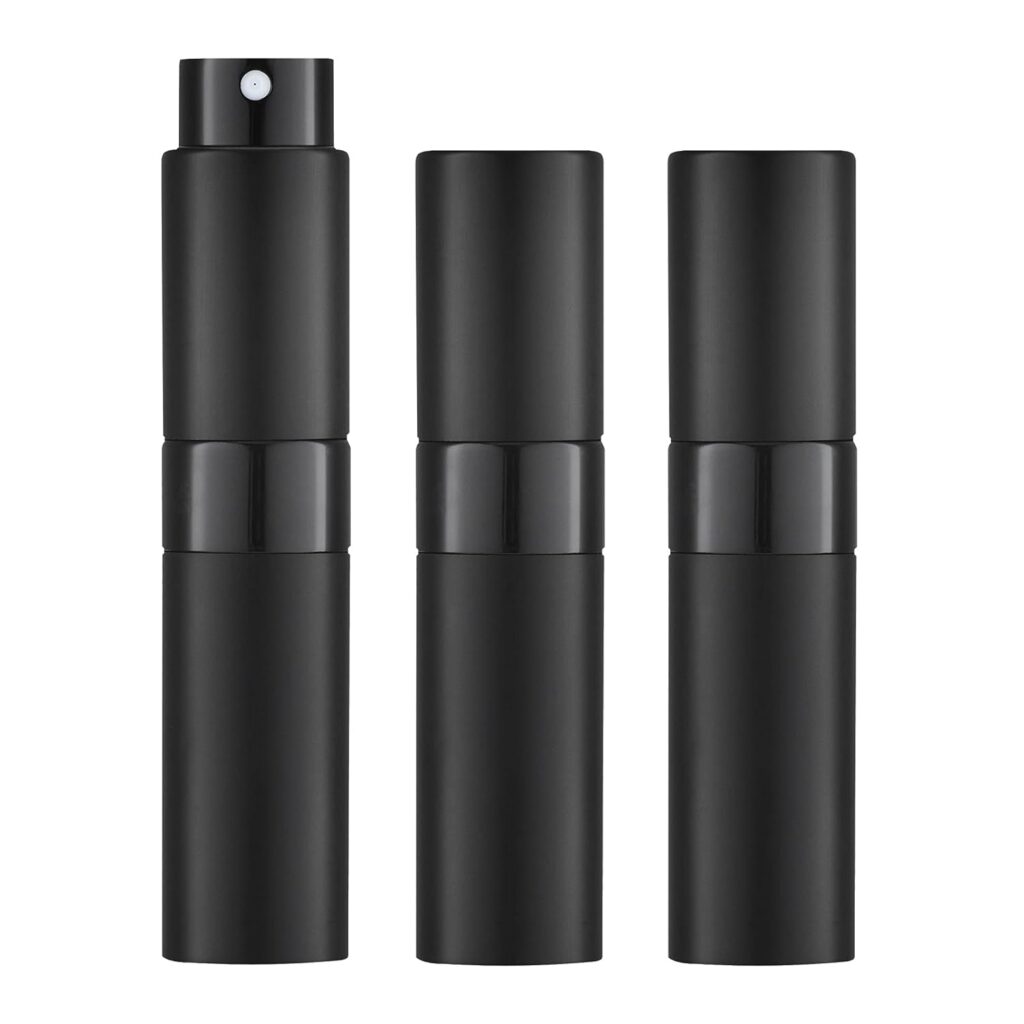
Refillable bottles make sense when you prefer a product you already use and only need a little of it. Choose leak-resistant containers, label them and test them at home. The phrase “TSA-approved bottle” does not by itself guarantee that the contents can pass every airport checkpoint. For U.S. departures, consult the current TSA liquids rule; elsewhere check the departure airport’s rules.
See refillable-bottle examples on Amazon (paid link). A small perfume atomizer is optional, not a must-have; a sealed sample or no fragrance at all may be simpler.
6. Rain protection: choose one solution for the itinerary
A compact umbrella works well for short walks in town when you can keep a hand free. A light rain shell is easier to manage on a hike or when carrying luggage, but can be warmer in humid weather. You rarely need both for a short trip. Check the forecast close to departure and use the jacket you already own if it does the job.
See compact-umbrella examples on Amazon (paid link). Compare closed length and weight with your day bag.
Useful items that are easy to overbuy
- Travel pillow: useful for some overnight journeys, but bulky for a weekend trip. Try it before departure.
- Compression bags: save volume, not weight. Leave room for dirty laundry and check your airline’s baggage limit.
- Filtered water bottle: only useful if its filter matches the water conditions at your destination. A plain refillable bottle is often enough.
- Card-sized multi-tool: easy to forget at security. Check the rules for every airport on the route; sharp tools belong outside your cabin-bag plan.
- Large first-aid kit: take the medications and supplies you actually need rather than a bulky generic kit. Keep essential medication accessible and check destination rules.
Two packing plans
A four-day city break with one small bag
Start with documents, phone and charging cable, weather-appropriate clothes, essential toiletries and medication. Add one small organizer if the bag gets messy. Take a plug adapter only if the destination requires one; add an umbrella only if rain is likely. Skip a pillow, a second charger and a full toiletries set unless you have a specific need for them.
An overnight flight followed by several stops
Add a compact sleep mask, earplugs, a power bank that meets your airline’s rules, and two or three packing cubes. Keep one change of clothes and essential items easy to reach. Pack familiar snacks if your route and destination allow them, and check food import restrictions before crossing a border. A multi-tool is a poor choice for a cabin-only itinerary.
Before you buy
- Check your airline’s current cabin-bag dimensions and battery policy.
- Check airport security rules for liquids and tools at every departure point.
- Measure your bag and the space each accessory will occupy.
- Compare the linked listing’s specifications and recent customer feedback; availability and price may change.
- Remove anything that duplicates an item you already own.
How this guide was prepared: Explorelio grouped common travel accessories by practical use and packing trade-offs. The linked listings are shopping examples. We have not performed hands-on tests of every linked product and do not present the links as a ranking of tested brands. This guide was editorially reviewed on 21 October 2026.