Prague Travel Guide 2026: Best Things to Do, Where to Stay and Essential Tips
Prague is one of Europe’s most beautiful and rewarding city-break destinations. Gothic towers, Baroque palaces, medieval streets and scenic river views give the Czech capital its famous fairytale atmosphere. At the same time, modern cafés, creative neighborhoods, excellent public transport and a lively cultural scene make Prague much more than an open-air museum.
This complete Prague travel guide will help you plan your first visit to the city. Discover the best things to do in Prague, where to stay, how to get around, what to eat, when to visit and how many days you should spend in the Czech capital.
Prague Travel Guide: Quick Facts
Country: Czech Republic
Currency: Czech koruna (CZK)
Language: Czech
Recommended stay: 3–4 days
Best time to visit: April–May and September–October
Main airport: Václav Havel Airport Prague (PRG)
Public transport: Metro, trams, buses, trolleybuses, trains and ferries
Best areas for first-time visitors: Old Town, Malá Strana and New Town
Best local neighborhoods: Vinohrady, Letná, Karlín and Holešovice
Is Prague Worth Visiting?
Prague is absolutely worth visiting, especially if you enjoy historic architecture, walkable city centers, panoramic viewpoints and European culture.
The city’s main attractions are located relatively close together. Prague Castle, Charles Bridge, Old Town Square, the Jewish Quarter and Wenceslas Square can all be included in a short city-break itinerary.
Prague is also an excellent destination for travelers interested in food, parks, museums, nightlife and photography. Stay a little longer and you can explore local neighborhoods such as Vinohrady, Karlín, Letná and Holešovice or take a day trip to Kutná Hora, Karlštejn Castle or Český Krumlov.
Although Prague is no longer as cheap as it once was, it can still offer good value compared with cities such as London, Paris or Amsterdam. Accommodation and restaurants are usually more affordable outside the streets immediately surrounding Old Town Square and Charles Bridge.
How Many Days Do You Need in Prague?
Three days is the ideal amount of time for a first visit to Prague.
With three full days, you can explore the city’s most important attractions without rushing. You will have enough time to see Old Town, Charles Bridge, Prague Castle, Malá Strana, the Jewish Quarter and at least one of Prague’s famous viewpoints.
Prague in One Day
A one-day Prague itinerary should focus on the historic center.
Start at Old Town Square and see the Astronomical Clock. Walk across Charles Bridge into Malá Strana and continue toward Prague Castle. Finish the day at Letná Park, Petřín Hill or another panoramic viewpoint.
Prague in Two Days
Spend the first day exploring Old Town, Charles Bridge, Malá Strana and Prague Castle.
On the second day, visit the Jewish Quarter, Wenceslas Square, the National Museum, the Dancing House and Vyšehrad.
Prague in Three or Four Days
With three or four days in Prague, you can add local neighborhoods such as Letná, Holešovice, Vinohrady or Karlín.
Families may want to spend most of one day at Prague Zoo. History and culture lovers can also visit the Jewish Museum, National Museum, National Technical Museum or one of Prague’s many galleries.
Best Things to Do in Prague
Prague offers an impressive combination of historical landmarks, cultural attractions, scenic parks and atmospheric neighborhoods.
These are the best places to visit during your first trip to Prague.
1. Explore Old Town Square
Old Town Square is the historic heart of Prague and one of the best places to begin your visit.
The square is surrounded by some of the city’s most recognizable buildings, including the Church of Our Lady before Týn, St. Nicholas Church and the Old Town Hall.
Its colorful façades, outdoor restaurants and historic architecture create one of Prague’s most photographed scenes.
Visit early in the morning for a quieter atmosphere. The square becomes especially crowded before the hourly performance of the Astronomical Clock.
2. See the Prague Astronomical Clock
The Prague Astronomical Clock is located on the southern wall of the Old Town Hall.
The medieval clock is one of the oldest functioning astronomical clocks in the world. Visitors gather every hour to watch the procession of the twelve apostles and other moving figures.
The performance itself is short, so consider combining it with a tour of the Old Town Hall.
You can also climb or take the lift to the top of the Old Town Hall Tower. The observation gallery offers one of the best views over Old Town Square and Prague’s red rooftops.
3. Walk Across Charles Bridge
Charles Bridge is one of the most famous attractions in Prague.
The historic stone bridge connects Old Town with Malá Strana across the Vltava River. It is lined with statues and protected by impressive bridge towers at both ends.
Charles Bridge is free to visit and open throughout the day and night.
For fewer crowds, visit shortly after sunrise. Late morning, afternoon and sunset are usually much busier.
Before crossing the bridge, you can climb the Old Town Bridge Tower for another panoramic view of Prague.
4. Visit Prague Castle
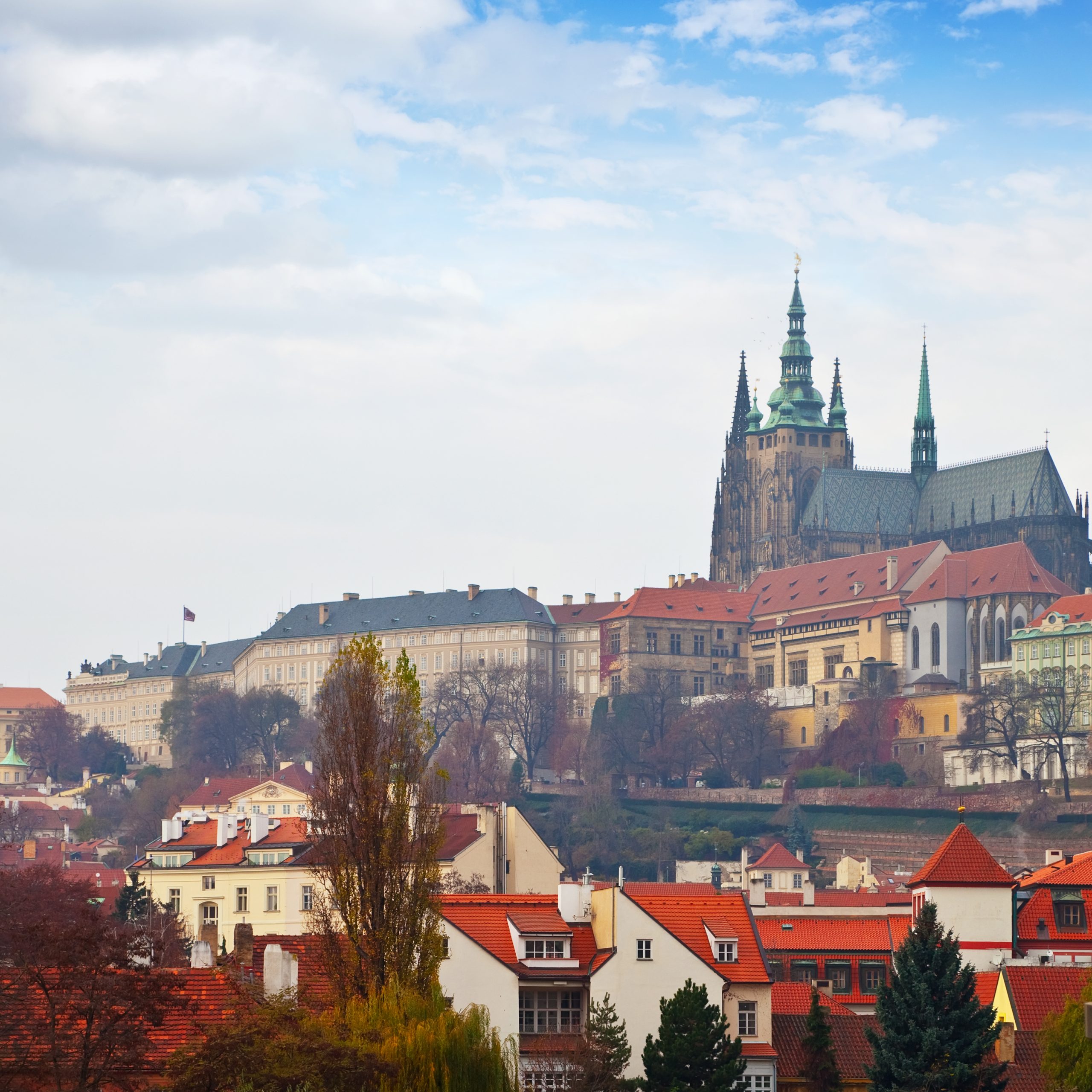
Prague Castle dominates the city skyline and is one of the largest castle complexes in the world.
The complex includes churches, palaces, courtyards, gardens and historic streets. Major attractions include St. Vitus Cathedral, the Old Royal Palace, St. George’s Basilica and Golden Lane.
You can enter the main castle grounds without purchasing a general admission ticket. However, tickets are required to visit most of the historical interiors.
Allow at least half a day to explore Prague Castle properly.
Arrive early in the morning to avoid the largest groups and queues. After your visit, walk downhill through Hradčany and Nerudova Street toward Malá Strana.
5. Admire St. Vitus Cathedral
St. Vitus Cathedral is the most important church in the Czech Republic and the dominant landmark within Prague Castle.
Its Gothic towers can be seen from many parts of the city. Inside, visitors can admire stained-glass windows, chapels, royal tombs and an impressive vaulted ceiling.
The cathedral has played an important role in Czech history and was used for royal coronations.
Do not miss the richly decorated St. Wenceslas Chapel, which contains the tomb of St. Wenceslas, one of the country’s most important patron saints.
6. Discover Malá Strana
Malá Strana, also known as Lesser Town, is one of Prague’s most picturesque neighborhoods.
The area is filled with Baroque buildings, historic palaces, narrow streets and hidden gardens. It lies directly below Prague Castle and extends toward Charles Bridge.
Places worth visiting in Malá Strana include St. Nicholas Church, Wallenstein Garden, Nerudova Street, Vojan Gardens and the Lennon Wall.
The neighborhood is ideal for slow sightseeing. Leave the main streets and explore the smaller lanes, courtyards and squares.
7. Relax on Kampa Island
Kampa Island is a peaceful riverside area located next to Malá Strana.
The island offers green spaces, walking paths and beautiful views across the Vltava River. It is a good place to stop for a picnic or a break from sightseeing.
Kampa is also home to Museum Kampa, which focuses on modern Central European art.
Nearby, you can see the Lennon Wall and the large crawling baby sculptures created by Czech artist David Černý.
8. Explore Prague’s Jewish Quarter
The Jewish Quarter, known as Josefov, contains some of the most important Jewish historical sites in Europe.
The area is home to several historic synagogues, the Jewish Museum and the Old Jewish Cemetery.
Important places to visit include the Spanish Synagogue, Pinkas Synagogue, Maisel Synagogue, Klausen Synagogue and the Old-New Synagogue.
The Old Jewish Cemetery contains thousands of historic tombstones placed closely together. It is one of the most powerful and memorable sites in Prague.
Allow at least two or three hours to explore the Jewish Quarter.
Most Jewish Museum sites are closed on Saturdays and Jewish holidays, so check the opening hours before your visit.
9. Visit Petřín Hill
Petřín Hill is one of the best places in Prague for parks, gardens and panoramic views.
At the top of the hill, you will find Petřín Tower, the Mirror Maze, Štefánik Observatory and several peaceful gardens.
Petřín Tower is often described as Prague’s miniature Eiffel Tower. Visitors can climb to the observation platform for a sweeping view over the city.
Petřín is particularly beautiful during spring, when the trees are in bloom, and in autumn, when the leaves change color.
The Petřín funicular has undergone a major reconstruction, so check its current operating status before your visit.
When the funicular is unavailable, you can walk uphill from Újezd or approach Petřín from the Strahov and Pohořelec area.
10. Walk Through Wenceslas Square
Wenceslas Square is one of the main commercial and historical areas in New Town.
The wide boulevard is lined with shops, hotels, restaurants and office buildings. At the upper end of the square stands the National Museum and the statue of St. Wenceslas.
The square has been the setting for many important moments in Czech history, including political demonstrations and celebrations.
Although it is less picturesque than Old Town Square, Wenceslas Square is an important part of central Prague and a useful transport hub.
11. Visit the National Museum
The National Museum stands at the top of Wenceslas Square.
Its main historical building contains exhibitions focused on Czech history, nature, culture and science. The renovated interiors are among the most impressive museum spaces in Prague.
A connecting underground corridor leads to the museum’s modern building nearby.
The National Museum is a good option for rainy or cold days and can easily take several hours to explore.
12. See the Dancing House
The Dancing House is one of Prague’s most recognizable modern buildings.
Its curved towers were inspired by the famous dancing couple Fred Astaire and Ginger Rogers, which is why the building is sometimes called Fred and Ginger.
The unusual architecture creates a strong contrast with the traditional buildings along the river.
The upper floors include a restaurant, bar and viewing terrace with views over the Vltava River, Prague Castle and the surrounding city.
13. Walk Along Náplavka
Náplavka is a popular riverside promenade located south of the Dancing House.
On warmer days, locals gather here to sit by the river, visit cafés located inside former riverside vaults or enjoy food and drinks aboard moored boats.
Seasonal events, concerts and farmers’ markets are regularly held along the embankment.
Náplavka is especially lively during spring and summer evenings.
14. Escape the Crowds at Vyšehrad
Vyšehrad is a historic fortress complex located above the Vltava River.
It is quieter than Prague Castle and offers beautiful views, green spaces and walking paths.
Major attractions include the Basilica of St. Peter and St. Paul, Vyšehrad Cemetery, historic fortifications and several panoramic viewpoints.
Vyšehrad Cemetery is the final resting place of many important Czech artists, writers, musicians and public figures.
The fortress grounds are ideal for a peaceful walk, picnic or sunset visit.
15. Enjoy the View from Letná Park
Letná Park offers one of the best free viewpoints in Prague.
From the park, you can see several bridges crossing the Vltava River, as well as the towers and rooftops of Old Town.
The park is popular with walkers, runners, cyclists and families. During warmer months, the Letná beer garden becomes a popular meeting place.
Letná Park can easily be combined with a visit to the National Technical Museum or the nearby Holešovice neighborhood.
16. Visit the National Technical Museum
The National Technical Museum is one of Prague’s best attractions for families, technology enthusiasts and anyone interested in transport.
The museum’s most famous section is the large Transportation Hall, which contains historic cars, motorcycles, bicycles, aircraft and locomotives.
Other exhibitions cover astronomy, architecture, photography, printing, household technology and scientific development.
The museum is located close to Letná Park and is an excellent indoor activity during bad weather.
Suggested Three-Day Prague Itinerary
A three-day itinerary gives you enough time to see the main attractions while also experiencing some quieter parts of the city.
Day One: Old Town and the Jewish Quarter
Begin your first day at Powder Gate Tower and walk toward Old Town Square.
See the Church of Our Lady before Týn, the Old Town Hall and the Astronomical Clock. Explore the surrounding medieval streets before continuing into the Jewish Quarter.
Spend the afternoon visiting the synagogues and the Old Jewish Cemetery.
In the evening, cross the river and walk to Letná Park for sunset views over Prague’s bridges.
Day Two: Prague Castle and Malá Strana
Take tram 22 toward Prague Castle and arrive early in the morning.
Visit St. Vitus Cathedral, the Old Royal Palace, St. George’s Basilica and Golden Lane.
After leaving the castle, walk through Hradčany and down Nerudova Street into Malá Strana.
Visit St. Nicholas Church, Kampa Island and the Lennon Wall before crossing Charles Bridge near sunset.
Day Three: New Town and Vyšehrad
Start the day at Wenceslas Square and visit the National Museum.
Continue toward the Dancing House and walk along the river to Náplavka.
Spend the afternoon exploring Vyšehrad, including the basilica, cemetery and fortress viewpoints.
In the evening, visit Vinohrady, Karlín or Holešovice for restaurants, cafés and a more local atmosphere.
Where to Stay in Prague
Choosing the right neighborhood can make a significant difference to your Prague trip.
The best area depends on whether you prioritize sightseeing, nightlife, quiet streets, transport connections or local restaurants.
Old Town: Best for First-Time Visitors
Old Town is the most convenient area for first-time visitors who want to stay close to Prague’s main attractions.
Charles Bridge, Old Town Square, the Astronomical Clock and the Jewish Quarter are all within walking distance.
The main disadvantages are higher prices, large crowds and possible street noise, particularly during weekends and summer.
Malá Strana: Best for Couples
Malá Strana is one of the most romantic places to stay in Prague.
Its historic streets, Baroque buildings and proximity to Prague Castle and Charles Bridge make it ideal for couples and travelers looking for a traditional atmosphere.
The area is generally quieter than Old Town, although some streets are steep and covered with cobblestones.
New Town: Best for Convenience
New Town offers excellent transport connections and a wider range of hotels.
The neighborhood includes Wenceslas Square, the National Museum, the Dancing House and the main railway station.
It is a practical choice for travelers arriving by train or anyone who wants to stay centrally without being directly inside the busiest part of Old Town.
Vinohrady: Best for Cafés and Local Life
Vinohrady is an attractive residential neighborhood filled with cafés, restaurants, parks and elegant 19th-century buildings.
It offers a more local atmosphere while remaining close to the city center.
Frequent metro and tram connections make it easy to reach the main attractions.
Letná and Holešovice: Best for Modern Prague
Letná and Holešovice are excellent choices for independent travelers interested in contemporary art, design, cafés and nightlife.
The neighborhoods are less touristy than Old Town and have frequent tram connections to the city center.
Holešovice is also home to several cultural venues, galleries and the Prague Exhibition Grounds.
Getting Around Prague
Prague has an efficient and affordable public transport system.
The network includes metro lines, trams, buses, trolleybuses, suburban trains and several ferries.
Most attractions in central Prague can be reached on foot. Public transport is useful for longer journeys and for reaching places such as Prague Castle, Letná, Holešovice, Vinohrady, Vyšehrad and Prague Zoo.
Prague Public Transport Tickets
Prague public transport tickets are based on time rather than the number of journeys.
Common ticket options include short-term tickets valid for approximately 30 or 90 minutes and longer passes valid for 24 or 72 hours.
The exact prices may change, so check the official Prague Integrated Transport website or the PID Lítačka application before your trip.
Tickets can be purchased from:
- Ticket machines at metro stations
- Selected tram and bus ticket machines
- Newsstands and information centers
- The PID Lítačka mobile application
- Contactless terminals inside selected vehicles
Paper tickets must normally be validated when you begin your journey. Do not validate the same ticket again when transferring.
Mobile tickets must be activated before boarding or entering the paid area of a metro station.
Prague Metro
Prague has three main metro lines:
- Line A – Green
- Line B – Yellow
- Line C – Red
The metro is fast and useful for longer journeys across the city.
For sightseeing in central Prague, trams are often more convenient because they stop closer to many popular attractions.
Prague Trams
Trams are one of the best ways to explore Prague.
Many routes pass through scenic parts of the city, making the journey itself part of the sightseeing experience.
Tram 22 is particularly useful for visitors because it travels through Malá Strana and continues toward Prague Castle, Pohořelec and other elevated parts of the city.
Night trams and buses operate after the daytime metro service ends.
How to Get from Prague Airport to the City Center
Václav Havel Airport Prague does not currently have a direct metro connection.
The most common public transport routes are:
- Trolleybus 59 to Nádraží Veleslavín, followed by Metro Line A
- Bus 100 to Zličín, followed by Metro Line B
- Airport Express bus to Prague Main Railway Station
- Official airport taxi
- Ride-hailing service
- Pre-booked private transfer
Trolleybus 59 is usually the most convenient public transport option for reaching the central districts located along Metro Line A.
Regular public transport tickets can be used on the standard airport bus and trolleybus connections. The Airport Express service uses a separate fare.
Is the Prague Visitor Pass Worth It?
The Prague Visitor Pass is the city’s official sightseeing card.
It includes admission or discounts for a range of attractions and unlimited public transport during its period of validity.
The pass is usually available for several durations, including 48, 72 and 120 hours.
It may be worthwhile if you plan to visit several paid attractions within a short period.
Before purchasing the pass, create a list of the attractions you genuinely want to visit and compare their individual admission prices with the cost of the pass.
The Prague Visitor Pass may not provide good value if your itinerary focuses mainly on free viewpoints, parks, neighborhoods and walking tours.
Best Things to Do in Prague with Kids
Prague is a family-friendly city with parks, museums, playgrounds and interactive attractions.
Keep in mind that the historic center has many cobbled streets, steps and hills, which can make some routes more difficult with a stroller.
Prague Zoo
Prague Zoo is one of the city’s most popular family attractions.
The zoo has extensive outdoor areas, indoor pavilions, playgrounds and viewpoints over the city.
Because the zoo is very large, allow at least half a day. Families interested in animals can easily spend most of the day there.
Petřín Mirror Maze
The Mirror Maze is a small but entertaining attraction located near Petřín Tower.
Children can explore a maze of mirrors and a room filled with distorted reflections.
Combine the attraction with the surrounding gardens, Petřín Tower and Štefánik Observatory.
National Technical Museum
The National Technical Museum is one of the best rainy-day activities for families.
The Transportation Hall, aircraft, historic vehicles and technical exhibitions are interesting for both children and adults.
Prague Planetarium
Prague Planetarium is located close to Stromovka Park.
It offers astronomy programs and immersive shows, although the available languages depend on the individual performance.
Check the current program before visiting.
Kampa Island
Kampa Island has riverside paths, green spaces and playgrounds.
It is a convenient place for families to stop while exploring Malá Strana and Charles Bridge.
Stromovka Park
Stromovka is one of Prague’s largest parks.
Its wide paths, ponds, lawns and playgrounds make it ideal for walking, cycling, picnics and relaxing with children.
Visiting Prague with a Dog
Prague is a relatively dog-friendly city.
Dogs are commonly seen in parks, on public transport and in outdoor dining areas. Many cafés and restaurants allow dogs, although the final decision always depends on the individual business.
Always check the rules of your accommodation and any attraction you plan to visit.
Stromovka Park
Stromovka offers wide paths, lawns, ponds and plenty of space for a long walk.
It is one of the best places in Prague for dog owners looking for a break from the busy city center.
Letná Park
Letná Park combines open spaces, walking paths and panoramic views.
The park is conveniently located between the city center and Holešovice.
Riegrovy Sady
Riegrovy Sady is a popular park in Vinohrady.
It has lawns, walking areas and a famous viewpoint overlooking Prague Castle.
Vítkov Hill
Vítkov Hill offers longer walking paths, open spaces and views over different parts of Prague.
The National Monument stands at the summit.
Prague Zoo with a Dog
Dogs may be permitted at Prague Zoo under specific visitor rules.
They must usually remain on a leash and may not be allowed inside certain pavilions or animal areas.
Check the zoo’s latest dog policy before your visit.
What to Eat in Prague
Traditional Czech cuisine is hearty and commonly includes meat, sauces, cabbage, potatoes and dumplings.
These are some of the foods worth trying in Prague.
Svíčková
Svíčková consists of beef served with a creamy root vegetable sauce, bread dumplings and cranberry sauce.
It is one of the most famous traditional Czech meals.
Czech Goulash
Czech goulash is a thick meat stew usually served with bread dumplings.
It differs from Hungarian goulash and is commonly available in traditional restaurants and pubs.
Roast Duck
Roast duck is usually served with red or white cabbage and several types of Czech dumplings.
It is a rich meal that is often associated with weekends and festive occasions.
Schnitzel
Breaded pork or chicken schnitzel is commonly served with potatoes or Czech-style potato salad.
Chlebíčky
Chlebíčky are traditional Czech open-faced sandwiches.
They are usually topped with ham, cheese, eggs, vegetables, spreads or potato salad.
Koláče
Koláče are small sweet pastries filled with ingredients such as fruit, poppy seeds, plum jam or sweetened cheese.
Czech Beer
The Czech Republic is famous for its lager.
Prague has traditional pubs, historic breweries, modern taprooms and craft beer bars.
Is Trdelník a Traditional Prague Food?
Trdelník is widely sold in the center of Prague, especially around Old Town and Malá Strana.
Although it is popular with visitors, it should be considered a modern tourist snack rather than an authentic traditional Prague dessert.
For a more local experience, try Czech pastries such as koláče, buchty or větrník.
Prague Travel Costs
The cost of visiting Prague depends on your travel dates, accommodation preferences and the areas where you eat.
Prague is not as cheap as it was in the past, particularly in the historic center. However, budget travelers can still control costs by using public transport and exploring neighborhoods outside Old Town.
Prague on a Budget
Budget travelers can save money by:
- Staying outside Old Town
- Using public transport
- Eating lunch menus at local restaurants
- Visiting free parks and viewpoints
- Buying food from supermarkets or bakeries
- Avoiding restaurants directly on major tourist squares
Mid-Range Prague Trip
A mid-range Prague trip may include a centrally located hotel, several paid attractions, restaurant meals and occasional taxis or ride-hailing services.
Travel outside peak summer dates and the Christmas market season for better accommodation prices.
Luxury Prague Trip
Prague offers luxury hotels, historic palace accommodation, fine dining restaurants, private tours and premium river cruises.
Many of the city’s most luxurious hotels are located in Old Town, Malá Strana and around the Vltava River.
Prague Weather by Season
Prague has four distinct seasons.
Weather can change quickly, so check the forecast shortly before your departure and bring layers throughout most of the year.
Spring in Prague
Spring lasts from March to May.
March can still be cold, while April and May usually bring milder temperatures, longer days and flowering parks.
Late April and May are among the best times to visit Prague. The weather is usually comfortable for walking, although weekends and public holidays can still be busy.
Petřín Hill, Prague Castle gardens and Vojan Gardens are especially attractive during spring.
Summer in Prague
Summer lasts from June to August.
The season brings long daylight hours, outdoor dining, festivals and warm evenings.
Hot days are possible, particularly in July and August. Visit major attractions early in the morning and plan museums or indoor activities during the hottest part of the afternoon.
Summer is one of Prague’s busiest travel periods, so accommodation prices are often higher.
Autumn in Prague
Autumn lasts from September to November.
September and early October often provide pleasant temperatures and fewer visitors than midsummer.
Autumn foliage makes Petřín Hill, Letná Park, Stromovka and Vyšehrad particularly beautiful.
By November, the days become shorter and colder.
Winter in Prague
Winter lasts from December to February.
December is popular because of Prague’s Christmas markets, festive decorations and seasonal atmosphere.
January and February are generally quieter and may offer lower hotel prices.
Snow is possible but not guaranteed. Pack warm clothing, waterproof footwear, gloves and a hat.
Best Time to Visit Prague
The best time to visit Prague depends on your priorities.
April, May, September and early October usually provide the best combination of comfortable weather and manageable crowds.
Best Time for Pleasant Weather
Visit in May, June or September.
These months usually offer mild or warm weather that is suitable for walking and outdoor sightseeing.
Best Time for Fewer Crowds
Visit in January, February, March or November.
Some attractions may have shorter opening hours, but accommodation prices can be lower.
Best Time for Christmas Markets
Visit from late November through December.
The main Christmas markets are usually held in Old Town Square and Wenceslas Square, although exact dates change each year.
Best Time for Parks and Flowers
Visit in April or May.
Spring blossom is especially beautiful around Petřín Hill, Prague Castle and several city gardens.
Best Time for Autumn Colors
Visit during October.
Parks and elevated viewpoints are particularly attractive as the leaves change color.
Essential Prague Travel Tips
These practical Prague travel tips will help you avoid common mistakes and make your trip easier.
Use Czech Koruna
The official currency is the Czech koruna, abbreviated as CZK.
Although some tourist businesses accept euros, the exchange rate may be unfavorable.
Cards are widely accepted, but it is still useful to carry a small amount of Czech cash.
Pay in CZK
When a card terminal or ATM asks whether you want to pay in Czech koruna or your home currency, choose Czech koruna.
Paying in your home currency may involve dynamic currency conversion and a poor exchange rate.
Be Careful When Exchanging Money
Use reputable exchange offices and always check the final amount you will receive.
Avoid businesses that advertise attractive rates but add hidden fees or use misleading buy and sell rates.
Wear Comfortable Shoes
Prague is highly walkable, but the historic center contains cobblestones, hills, steps and uneven surfaces.
Comfortable shoes are essential.
Start Sightseeing Early
Charles Bridge, Prague Castle and Old Town Square are significantly quieter early in the morning.
Use the busiest part of the day for museums, restaurants or neighborhoods outside the historic center.
Book Popular Attractions in Advance
Popular tours, river cruises and selected attractions may sell out during weekends and peak travel periods.
Book in advance when visiting during summer, Easter or the Christmas market season.
Check Opening Hours
Opening hours can change according to the season, public holidays and special events.
Always verify current information on the attraction’s official website.
Validate Public Transport Tickets
Validate paper tickets when beginning your journey.
Mobile tickets must be active before you board a vehicle or enter the paid area of a metro station.
Ticket inspections are common.
Avoid Restaurants on Major Tourist Squares
Restaurants located directly on Old Town Square and the busiest streets are often more expensive.
Walk several streets away or explore neighborhoods such as Vinohrady, Karlín, Letná and Holešovice for better value and a more local atmosphere.
Is Prague Safe?
Prague is generally considered a safe destination for solo travelers, couples and families.
Serious violent crime affecting visitors is uncommon. However, pickpocketing and tourist scams can occur in crowded areas.
Pay extra attention to your belongings around:
- Charles Bridge
- Old Town Square
- Wenceslas Square
- Busy trams and metro stations
- The main railway station
- Major tourist attractions
Keep valuables secure and avoid leaving phones or wallets on outdoor restaurant tables.
Use official airport transport, reputable taxi services or established ride-hailing applications.
Frequently Asked Questions About Prague
What Is Prague Best Known For?
Prague is best known for Prague Castle, Charles Bridge, Old Town Square, the Astronomical Clock and its combination of Gothic, Renaissance, Baroque and Art Nouveau architecture.
Is Three Days Enough in Prague?
Three days is enough to see Prague’s most important attractions without rushing.
You can explore Old Town, Prague Castle, Malá Strana, the Jewish Quarter, New Town and at least one panoramic viewpoint.
Is Prague a Walkable City?
Is Central Prague is very walkable.
Most major attractions are located within or near the historic center. Public transport is useful for reaching Prague Castle, Letná, Holešovice, Vinohrady, Prague Zoo and accommodation outside central Prague.
What Is the Best Area to Stay in Prague?
Old Town is best for first-time visitors who want to stay close to the main attractions.
Malá Strana is ideal for couples and historic atmosphere. New Town is practical for transport connections, while Vinohrady is better for cafés and local life.
What Should You Not Miss in Prague?
Do not miss Prague Castle, St. Vitus Cathedral, Charles Bridge, Old Town Square, the Astronomical Clock, Malá Strana and at least one panoramic viewpoint.
Is Prague Expensive?
Prague is more expensive than it was in the past, particularly around Old Town Square and Charles Bridge.
Public transport is still affordable, and restaurants or hotels outside the most touristy areas can provide better value.
Do You Need Cash in Prague?
Most hotels, restaurants, shops and attractions accept payment cards.
A small amount of Czech cash is useful for markets, smaller businesses and unexpected situations.
Is Prague Good for Families?
Prague is a good destination for families.
Prague Zoo, the National Technical Museum, Petřín Hill, Stromovka Park, Kampa Island and the planetarium are among the best family-friendly attractions.
Is Prague Dog Friendly?
Prague is relatively dog friendly.
Many parks, cafés and outdoor restaurant areas welcome dogs. Rules differ between individual hotels, restaurants, museums and attractions, so check them before your visit.
What Is the Best Month to Visit Prague?
May and September are among the best months to visit Prague.
They usually offer comfortable sightseeing weather, long daylight hours and fewer crowds than peak summer.
Final Thoughts on Visiting Prague
Prague combines famous historical landmarks with scenic parks, walkable neighborhoods, riverside views and an increasingly modern food and cultural scene.
Spend at least three days in the city if possible. Visit the main sights early in the morning, use Prague’s efficient public transport and leave time to explore beyond Old Town.
Prague Castle, Charles Bridge and the Astronomical Clock are essential for a first visit, but some of the city’s best experiences can also be found in quieter places such as Vyšehrad, Letná, Vinohrady, Karlín and Holešovice.
A balanced Prague itinerary should include historic attractions, panoramic viewpoints, local restaurants, riverside walks and enough free time to enjoy the city without rushing.